A Duplex Back Deck Failed Inspection And A Rebuild Restarted The Rent
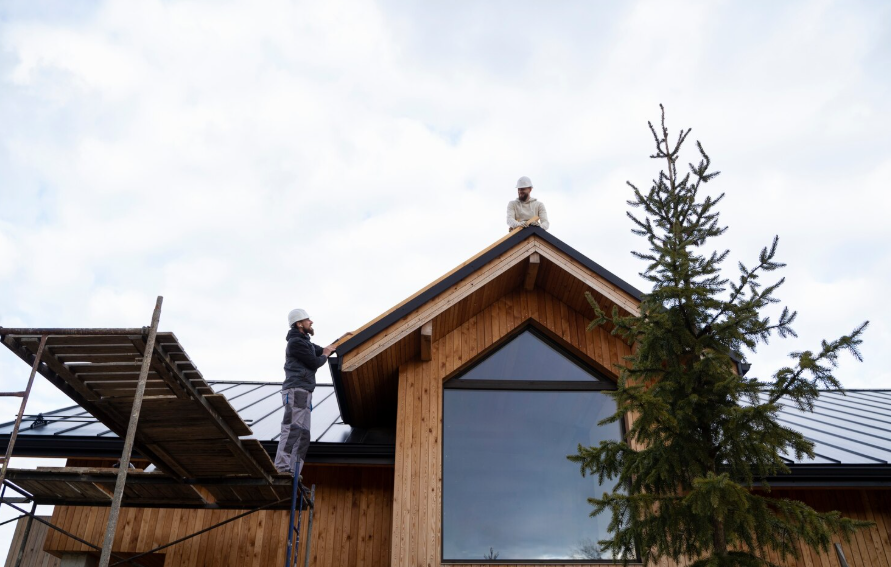
Vacancy costs this landlord about $310 a week. Vacancy costs more when the deck companies Kansas City MO owners call are booked three weeks out. Vacancy costs most when the same rear deck gets patched twice in one year. That is the short version of what happened at a 1990s two-unit rental north of the river, where a failed back deck stretched a turnover that should have run four weeks. The argument underneath it is plain: on a small rental, rebuilding the deck once costs less than the empty weeks a run of repairs buys you.
Vacant Weeks Cost More Than The Deck Did
Each unit rents at about $1,350, so a week sitting empty runs roughly $310 in rent that never arrives. The turnover was budgeted at four weeks. Paint, floors, a new range, done. The deck added five more weeks on top of that, and five weeks is about $1,550 of rent gone before a single board was ordered. Empty weeks, not lumber, are the expensive part of a bad deck. Vacancy is the line item that keeps billing after the tenant leaves.
The Ledger Board Was The Real Problem
The surface boards looked tired, which is exactly what the owner expected to pay for. The failure was underneath them. On these mid-1990s Northland duplexes, what usually turns up is a ledger board nailed to the rim joist with no flashing above it, so twenty-five springs of rain have run straight down behind the siding and into the band joist nobody can see. Nailed-only ledgers and rotted stair stringers are the parts that drop people. The decking you walk on is rarely the thing that lets go.
What The Inspector Flagged On The Rear Landing
Three items came back on the rear landing: a guardrail sitting under 36 inches and moving when pushed, a stair stringer gone soft at the bottom tread, and the landing itself pulled roughly half an inch off the wall. Permit history took ten minutes to pull through Compass KC, the city’s public permit portal, and it showed no deck permit had ever been issued for the address. That report is also the document the deck companies Kansas City MO owners call will price from, so getting it in hand before making calls saves a round of guessing. A written scope beats a phone description every time.
One Bid Priced Repair And One Priced Rebuild
Two bids came back and they were not answering the same question. The repair bid covered new decking, two stair stringers and a code-height handrail: call it $2,400 and two days on site. The rebuild bid covered four new footings, a bolted and flashed ledger, new framing, a proper guardrail and rebuilt stairs, closer to $9,000 and about nine working days once the permit cleared. On paper the repair wins by $6,600, and the owner nearly signed it. Then he ran the numbers forward instead of sideways. A repair leaves the same ledger and the same wet band joist in the wall, so the next inspection finds the identical problem and the next turnover stalls again. Say that happens twice over the following few years, five weeks lost each time. That is roughly $3,100 in rent, plus a second repair invoice, plus the days he spends meeting contractors instead of running the rest of his portfolio. Stack that against the $6,600 gap and the spread is thinner than it looks on the first read. There was one more thing the spreadsheet could not price: a rebuilt deck moved the unit from showing badly to showing well, and in the Northland an August listing with a solid back deck rents faster than one with fresh paint and a wobbly rail.
Week One To Month Three On A Turnover Build
The first week was demolition, four new footings and an inspection before any concrete was buried. Week two brought framing, the bolted ledger with flashing tucked up behind the siding, stairs and guardrail, and the unit was photographed and listed within 30 days of the first phone call. By month three the deck had taken two heavy storms and a tenant’s grill without a complaint.
Keep people off it in the meantime. A raised deck pulling away at the ledger, or missing a solid guardrail, gets roped off and stays empty until a qualified builder or inspector has looked at it, which is the same instinct written into 29 CFR 1910.22(d)(2), where OSHA requires a hazardous walking surface to be corrected before anyone uses it again and guarded so nobody can get onto it until the work is done. Nothing about showing a vacant unit is worth walking a prospect across a questionable landing.
A Deck Built To Last Ends The Turnover Scramble
The scale of this is bigger than one duplex. A May 2026 Simpson Strong-Tie report counted about 8,700 people injured and two killed by deck, porch and balcony collapses between 2020 and 2024, and it put roughly half of the country’s 60 million decks past their usable life. Plenty of those are on rentals, quietly waiting for a turnover inspection. The owner north of the river spent more than he wanted to and got the thing off his list permanently, which on a two-unit property is what a scheduled window is for: one crew, one permit, one set of vacant weeks instead of three.