Snaking The Same Drain Every Month Is Not A Repair
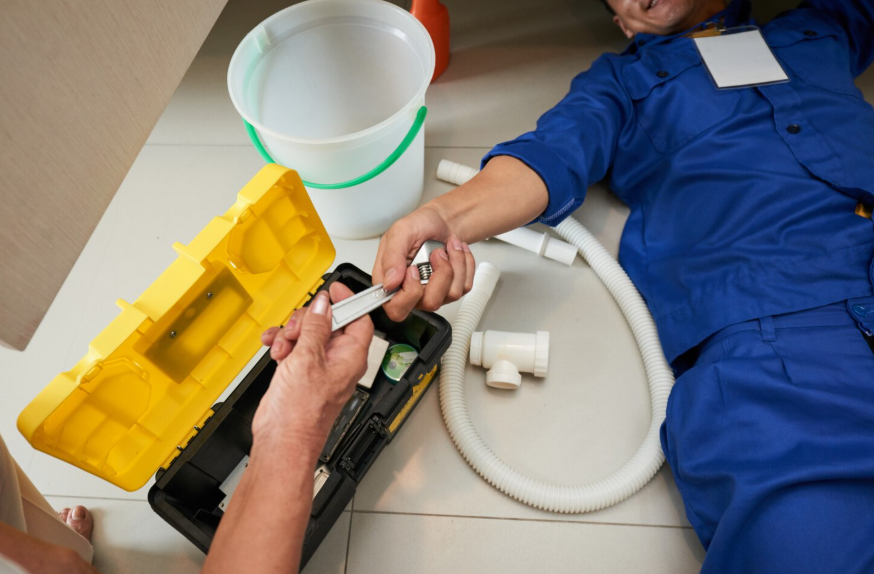
Four snaking visits in fourteen months, about $260 a call, and the hall tub still took most of a minute to empty. The house was a four bedroom on the south end of Stockbridge, sitting on a 1,000 gallon septic tank with a clay lateral buried sometime around 1983. Every time the toilets started gurgling, the owner pulled up a list of local plumbers stockbridge ga and booked whoever could come out that day. Here is the argument the whole job makes: a drain that backs up on a schedule is not a clog problem, it is a pipe or tank problem, and running a cable through it only buys three weeks.
Three Weeks Of Relief Is A Symptom
Two toilets gurgling while a tub empties slowly is not two problems. Both fixtures share whatever runs beneath them, so the trouble sits downstream of both, out past the wall. A cable punches a hole through the soft middle of whatever is sitting in that pipe, water moves, and the same obstruction rebuilds around the same defect while everyone relaxes. Nobody lied to that homeowner. The work got done, the drain ran, and the fault underneath it was never touched.
One thing gets said out loud before anything else on a call like this. If wastewater comes up into the house, stop running water anywhere on the property and keep children and pets out of the affected rooms. Have the contamination cleaned by a remediation professional rather than mopped up with towels, because sewage carries bacteria and viruses that a bucket of bleach water will not settle, and soaked carpet or drywall usually has to come out.
A plumber already standing in the house should be reading the rest of the system while he is there. The U.S. Consumer Product Safety Commission urges every household to set its water heater no higher than 120 degrees Fahrenheit, because water at 140 degrees or above causes burns in only a few seconds. Plenty of tanks in older houses still sit where the factory left them, and nobody checks the dial until somebody gets hurt.
The Camera Found Roots Under The Front Yard
The next visit started with a camera instead of a cable. The head goes down through the cleanout on a flexible rod carrying a sonde, which is a small transmitter that lets a second person stand in the yard with a locator and mark the ground directly above whatever the lens is looking at. What we call the lateral, meaning the buried run of pipe between the house and the septic tank, was clean for the first thirty feet or so.
At forty one feet the picture went dark. A root mass had come in through a joint in the clay and grown into a plug shaped like the inside of the pipe, and just past it two sections had shifted out of line by an inch, which is plenty to catch paper on every flush. Job after job on those early 1980s clay laterals, what turns up is the same pairing: a joint that has moved a little, and a tree that found the water first. Roots do not take a winter off.
The camera earns its fee on the septic side too. Run far enough, it shows the inlet baffle and the sludge line inside the tank, which settles the question nobody should be guessing at. Is this a pipe fault, or a tank that has stopped accepting water? A tank overdue for pumping pushes back up the line and mimics a clog almost exactly, and no amount of cable work touches that. On this house the tank read fine and the pipe was the entire story, which is why the fix could be small.
The Real Math On Repeat Snaking Calls
Put the numbers from that house side by side, keeping in mind these were one owner’s quotes and yours will land somewhere else. Four snaking calls at $260 comes to $1,040 over fourteen months, with a fifth already expected before spring. The camera inspection ran $325, the spot repair on the lateral was $1,850, and pumping and inspecting the tank while the yard was already open added $180, which comes to $2,355 all in for work that happens once.
The same arithmetic shows up on other equipment in that house. According to an August 2026 rundown from Family Handyman, a water heater typically lasts 10 to 15 years, and sediment begins to noticeably affect efficiency somewhere between the 5 and 10 year mark. Paying over and over for a symptom is a choice, and it is usually the more expensive one.
One Spot Repair Ended The Cycle
The repair took a single day. The crew opened a trench over the paint mark the locator had left in the front yard, cut out about six feet of failed clay, and set PVC with a two way cleanout on the property side so the next inspection needs no pulled toilet. Backfill went in that same afternoon and the sod came back over the top of it.
That was the entire repair. Fourteen months on, the line has not backed up once.
Recurring Backups Are Pipe Problems
A drain that fails on a rhythm is telling you where the money belongs. Cable work has its place, and on a one time clog from a wipe or a bad grease habit it is the right call. A backup that returns on a schedule has a cause sitting somewhere a cable was never going to reach. Anyone scrolling a list of local plumbers stockbridge ga pulled up at eleven at night should ask one thing before booking: does this visit include a camera run and a look at the septic side, or is it another pass with the same machine? Get the footage either way, because the recording is the only part of that job anyone can still look at a year from now.