Personalizing Your Typing Experience: The Rise of Custom Mechanical Keyboards
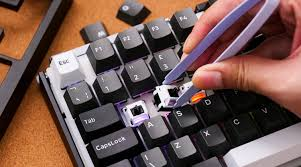
In the age of personal electronic devices, there’s an increasing demand for customization in every aspect of our digital lives. The phenomenon of keyboard customization is an extension of this trend, where users look to tailor the most tactile part of their computing experience – the keyboard. This isn’t just about aesthetics. The rise of custom mechanical keyboards represents a shift towards personalization that merges form, function, and ergonomic comfort, leading to a better typing experience.
Understanding the Movement Towards Customization
Once a niche hobby for tech enthusiasts and gamers, the custom mechanical keyboard community has burgeoned into a vibrant online and offline movement. The draw towards these custom solutions lies not only in their aesthetic appeal but also in the ability to tailor each component to the user’s preference.
Firstly, mechanical keyboards enable a level of tactile feedback that standard membrane keyboards simply cannot match. With distinct actuation points and a variety of switch types — from linear to clicky — users can select the exact feel they desire.
Secondly, the customizability of mechanical keyboards extends to their physical design. Users can choose from a range of layouts and form factors, from compact 60% keyboards to full-sized iterations, each providing a different typing experience.
The Components of a Custom Mechanical Keyboard
The personalization of a mechanical keyboard involves several components. The keycaps, switches, and the keyboard case can all be mixed and matched to suit individual tastes and typing styles.
Quality keycaps made from materials like PBT or ABS can last longer and provide different textures under the fingertips. Meanwhile, the switches beneath these keycaps come in a vast array of options, providing various levels of resistance, actuation force, and sound.
The case of a keyboard also plays a vital role. Besides its aesthetic contribution, the case material impacts the overall sound and weight of the keyboard, factors that can significantly alter the typing experience.
Enhancing Typing Through Customization
The typing experience is quite personal. Some individuals prefer a soft, silent press, while others revel in the clicky feedback of a tactile switch. Custom mechanical keyboards allow users to fine-tune their typing to match their exact preferences, potentially leading to increased speed, precision, and comfort.
This bespoke approach also caters to those who spend long periods typing, such as programmers and writers, who may benefit from a layout and switch type that minimize finger strain. A properly customized keyboard can result in a more efficient, comfortable, and enjoyable typing experience.
The Aesthetic Appeal of Custom Mechanical Keyboards
Aside from performance, there’s a significant visual allure in the world of custom mechanical keyboards. The ability to select from a wide array of color schemes, artisanal keycaps, and LED lighting options means that a keyboard can become a personal statement on one’s desk, mirroring the individual’s style and personality.
Furthermore, the community aspect of mechanical keyboard customization encourages the sharing of designs and innovations, pushing the aesthetic boundaries even further.
Where to Start with Custom Mechanical Keyboards
For newcomers to the custom mechanical keyboard scene, the array of options can be daunting. However, many online platforms and local enthusiasts’ groups can offer advice and share knowledge. Starter kits are an excellent way to dive in, offering a curated selection of components that can be assembled with relative ease. Companies like Keebz&Cables offer a range of custom mechanical keyboard kits, providing the building blocks for a personalized typing journey.
It is also essential to consider factors such as budget, time investment, and the level of customization desired. For some, a relatively simple modification — such as changing keycaps — could suffice. For others, building a keyboard from scratch might be part of the appeal.
The Impact on Ergonomics and Productivity
The ergonomic benefits of custom mechanical keyboards are significant. By selecting a keyboard that aligns with natural hand positioning and reduces repetitive strain, users can minimize the risk of injuries such as carpal tunnel syndrome.
Adopting a keyboard with a split design or a different layout may also lead to productivity gains, as it allows one to type for longer periods without discomfort.
Custom Mechanical Keyboards and Sustainability
In a world increasingly conscious about waste, custom mechanical keyboards offer a sustainable alternative to disposable peripherals. Their durable construction and the ability to replace individual components mean that they can last for years. This longevity places them ahead of cheaper, less sustainable options that end up in landfills more quickly.
The Role of Technology and Innovation
Advancements in technology have made custom mechanical keyboards more accessible than ever. The proliferation of 3D printing, for example, has allowed for the creation of bespoke parts that fit individual specifications. Open-source firmware and software further permit users to program their keyboards with custom functions and macros.
Conclusion: Embracing the Custom Keyboard Culture
At its core, the rise of custom mechanical keyboards is about more than just typing. It’s a celebration of individuality, craftsmanship, and ergonomic design. In a digital age that can often feel impersonal, customizing a piece of everyday technology fosters a connection between user and device that is both intimate and practical.
As technology evolves and the trend continues to grow, it’s clear that the custom mechanical keyboard isn’t just a fleeting fad. It’s a tech subculture with durability, much like the keyboards it champions — built to last and tailored to each user’s unique touch.
For users eager to embark on their journey of keyboard personalization, the options are vast and varied. Whether through purchasing a pre-made custom keyboard or assembling one from scratch, each choice brings them closer to achieving a truly personalized typing experience — one keystroke at a time.