The Real Cost of Ignoring Mudroom Design in a Busy Family Home
Introduction
Every family knows the chaos that unfolds the moment the front door swings open after school, work, or a weekend outing. Shoes fly in every direction, backpacks drop wherever gravity takes them, and a trail of mud, grass, and debris winds its way through the hallway and into the heart of the home. What many homeowners fail to realize is that this daily disorder isn’t just a matter of aesthetics, it’s a symptom of a deeper problem: a poorly designed mudroom, or worse, no mudroom at all.
The mudroom (or entryway) is one of the most functional spaces in any home, yet it’s consistently overlooked during design and renovation planning. For busy families, this oversight carries a real and compounding cost, not just in daily frustration, but in lasting damage to flooring, furnishings, and even household hygiene. Understanding those costs is the first step toward fixing them.
The Clutter Crisis Starts at the Door
When a home lacks a properly designed entry zone, clutter doesn’t stay at the door, it migrates. Without designated hooks, cubbies, or shelving, coats end up on dining chairs, keys get buried under mail, and sports equipment colonizes the living room floor. Over time, this isn’t just inconvenient; it becomes a genuine source of household stress.
Studies in environmental psychology consistently link cluttered living spaces to elevated cortisol levels, reduced focus, and lower overall wellbeing. For families with children, the effect is amplified. When kids don’t have a clear, easy system for dropping their belongings, a hook at their height, a cubby for their bag, a spot for their shoes, they default to chaos. And that chaos spreads.
Professional organizers frequently cite the entryway as the single highest-leverage space in the home. A well-designed mudroom with proper storage zones can eliminate up to 80% of the clutter that migrates into shared living areas. Ignoring that space doesn’t just mean a messy hallway, it means a messy everything.
Dirt Tracking and the Hidden Damage to Your Floors
One of the most financially significant consequences of a poorly planned entryway is what gets tracked in on the bottom of shoes. Outdoor debris, mud, sand, pet waste residue, pesticides, pollen, and more, doesn’t just look unpleasant. It works its way deep into carpet fibers, scratches hardwood, and grinds into grout lines. Over months and years, the damage accumulates quietly but substantially.
This is where the absence of a proper mudroom becomes especially costly. A well-designed entry includes durable, easy-to-clean flooring (tile or sealed concrete), a high-absorbency mat system, and, critically, a shoe-removal zone that actually gets used because it’s convenient and comfortable. When these elements are missing, shoes stay on. Debris travels freely.
For homes with carpeted hallways or living areas adjacent to the entry, the impact is severe. Dirt and grit act as abrasives within carpet fibers, breaking them down over time and causing irreversible matting. Beyond surface wear, allergens and bacteria embedded in carpet piles create indoor air quality issues that affect the whole family. Restoring heavily soiled or damaged carpets often requires professional deep steam carpet cleaning, a service that can remove embedded grime effectively, but one that shouldn’t be necessary every few months simply because the entryway wasn’t designed to do its job.
The Shoe Storage Problem Nobody Talks About
A family of four generates an astonishing volume of footwear. Between school shoes, sports cleats, rain boots, sneakers, sandals, and dress shoes, a typical household can have 30 to 50 pairs in active rotation. Without dedicated shoe storage in the entryway, those shoes end up in doorways, on stairs, and strewn across hallways, creating both a safety hazard and an aesthetic eyesore.
Tripping on shoes left near the door may sound like a minor inconvenience, but falls in the home are among the leading causes of household injuries, particularly for young children and older adults. Beyond safety, shoes left in random places act as constant visual triggers of disorder, a form of low-grade household stress that’s easy to underestimate.
The solution isn’t complicated, but it does require intentional design. Built-in benches with pull-out drawers, open cubby systems, ventilated shelving, and wall-mounted racks can accommodate an entire family’s footwear without encroaching on living space. The investment is modest; the payoff in daily ease and cleanliness is substantial.
Daily Frustration as a Design Failure
There’s a phrase designers use: “If it’s not easy, it won’t happen.” This principle applies perfectly to mudroom function. Families won’t remove shoes if there’s nowhere comfortable to sit. They won’t hang coats if the hooks are in the wrong spot or already overloaded. They won’t drop backpacks in designated spots if there are no designated spots.
Every time a family member trudges through the house in muddy shoes, or tosses a wet umbrella onto the kitchen counter, or spends ten minutes hunting for a missing glove, that’s a design failure playing out in real time. Multiply those moments across 365 days a year and across years of family life, and the cumulative cost in time, frustration, and household damage becomes very real.
Good mudroom design anticipates how families actually behave, not how they wish they behaved, and builds systems that make the right behavior the path of least resistance.
What a Proper Mudroom Should Include
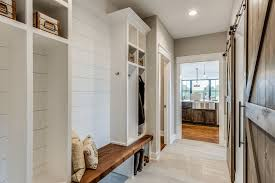
For homeowners ready to address the problem, the core elements of a functional mudroom are well established. At minimum, an effective entry zone should include a durable, washable floor surface that serves as a decontamination zone; a built-in bench or seating for shoe removal; individual hooks or cubbies for each family member; enclosed or vented storage for footwear; and a high-quality mat or mat system to capture debris before it enters the home.
For larger families or homes in wet climates, additional features like charging stations, a utility sink, or a wall-mounted drip dry area for wet gear can make a meaningful difference. The goal is a space that handles the full transition from outside to inside, not just decoratively, but functionally.
Conclusion
The mudroom may be one of the smallest rooms in the house, but its design impact radiates through the entire home. Ignoring it doesn’t save money, it costs money, in the form of damaged floors, lost time, persistent clutter, and the kind of low-level daily friction that quietly degrades household harmony. Flooring that absorbs years of tracked-in dirt may eventually need professional deep steam carpet cleaning to restore, but no cleaning service, however thorough, can substitute for a well-designed entry that prevents the problem in the first place.
For busy families, the mudroom isn’t a luxury. It’s a cornerstone of a functional home, one that deserves as much thoughtful planning as any other space in the house. Start at the door, and everything beyond it gets easier.